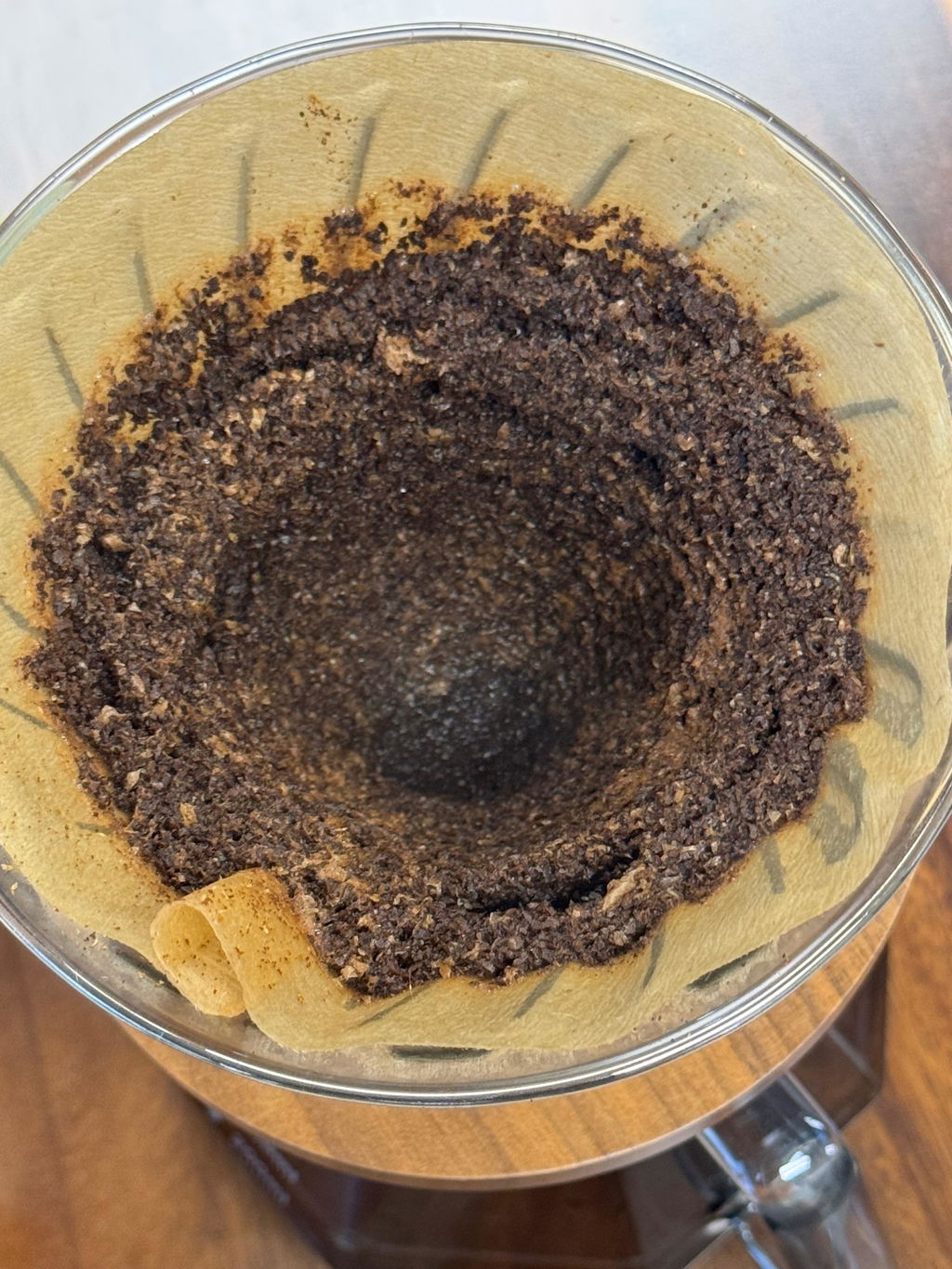
When people talk about “good coffee,” they often think about beans, roast level, or brewing tools. But one of the most important factors is something much smaller — grind size. The size of each coffee particle affects how quickly flavors extract and how your final cup tastes.
Why Grind Size Matters
Hot water pulls flavor out of coffee grounds.
If the grounds are too fine, water extracts too much flavor too quickly — the coffee becomes bitter.
If the grounds are too coarse, water passes through too fast — the coffee tastes sour or weak.
Finding the right grind size helps you hit the balance point where sweetness, acidity, and aroma come through naturally.

Common Grind Sizes & When to Use Them
1. Coarse Grind
Texture: like sea salt
Best for: French press, cold brew
Why: These methods use long brew times. Coarse grounds extract slowly and prevent bitterness.
2. Medium Grind
Texture: like sand
Best for: drip machines, pour-over
Why: Medium grind provides steady extraction and clean, balanced flavor.
3. Fine Grind
Texture: like powdered sugar
Best for: espresso, moka pot
Why: Espresso uses pressure and short brew time. Fine grounds help produce strong flavor and crema.

How to Adjust When Your Coffee Tastes “Off”
Too bitter? Try a coarser grind.
Too sour or sharp? Try a finer grind.
Flat or weak? Make the grind finer to boost extraction.
Small adjustments can change the entire profile of your coffee. Grind size is one of the easiest ways to improve flavor without buying new equipment.

Quick Summary
Grind size controls how fast flavor extracts.
Coarse = slower extraction; fine = faster extraction.
Match the grind to your brewing method for the best results.
Adjust grind size to fix common taste issues.